
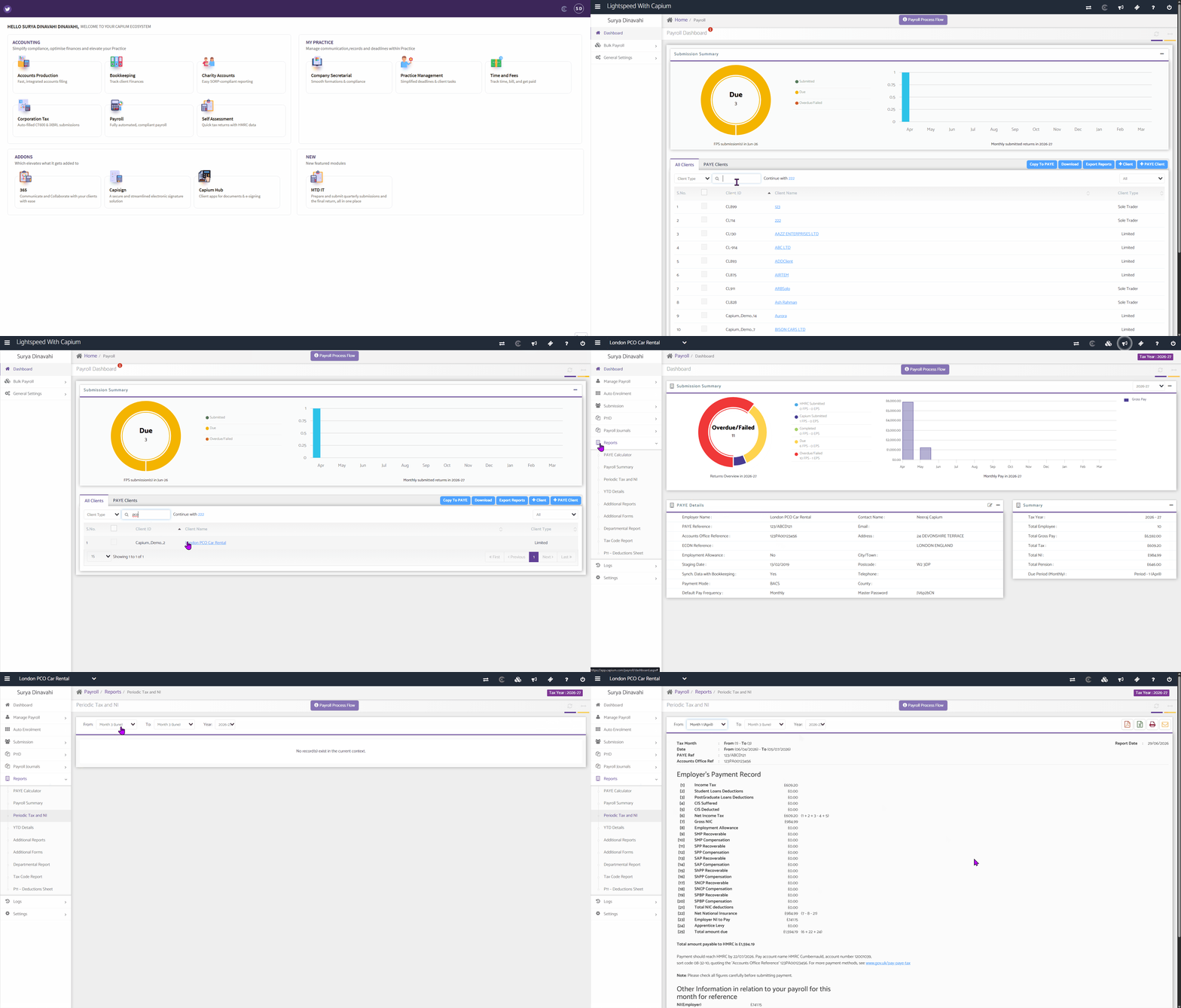
The P32, also called the Periodic Tax and National Insurance Report, is the employer payment record within Capium Payroll. It pulls together everything a client owes HMRC, or can reclaim, for a given tax period into a single view. This includes income tax, National Insurance, student and postgraduate loan deductions, statutory payment recoveries, CIS and the Apprenticeship Levy, ending with the total amount payable to HMRC.
This article explains when accountants and their staff use the report, where to find it in Capium, what each figure represents, and the new CIS suffered and CIS deducted feature.
When you use this report
The P32 is the reconciliation step before paying HMRC. After all pay runs for the tax period are complete, it confirms the net liability so you know exactly what to pay and by when.
Use it to:
- Confirm the PAYE and National Insurance liability for the tax month or quarter.
- Decide whether an Employer Payment Summary (EPS) is needed, for example to claim the Employment Allowance, recover statutory payments, or report CIS suffered.
- Check the amount payable and the date it must reach HMRC.
- Keep an internal record of each period's liability for the client's file.
Tax months run from the 6th of one month to the 5th of the next. The figures on the report reach HMRC through the Full Payment Submission (FPS) and the EPS, so the P32 itself is an internal record rather than a separate HMRC submission.
| Please Note: The P32 is not filed with HMRC. Under Real Time Information (RTI), the underlying figures are reported through the FPS and the EPS. The P32 brings those figures together so you can reconcile and pay the correct amount. |
Where to find the report in Capium
Navigation > Payroll > [select the client] > Periodic Tax and National Insurance Report
What the report shows
The report lists every element that makes up the liability for the period. The fields below appear in the order they build towards the total payable.
For statutory payments, the report shows two figures. Recoverable is the proportion of the statutory payment the employer can reclaim from HMRC, typically 92 per cent, or 100 per cent plus a small-employer compensation uplift where the business qualifies for Small Employers' Relief. Compensation is the additional National Insurance compensation that qualifying small employers can claim on top of the recovered amount.
| Field | What it shows |
|---|---|
| Income Tax | Total PAYE income tax deducted from employees for the period. |
| Net Income Tax | Income tax due after any adjustments have been applied. |
| Student Loan deductions | Student loan repayments collected through payroll. |
| Postgraduate Loan deductions | Postgraduate loan repayments collected through payroll. |
| Gross NIC | Total National Insurance for the period, employer and employee, before any reductions. |
| Employment Allowance | Reduction applied to the employer's secondary Class 1 National Insurance, where the client is eligible. |
| Statutory Maternity Pay (SMP) | The recoverable amount and the small-employer compensation for SMP paid in the period. |
| Statutory Paternity Pay (SPP) | The recoverable amount and the small-employer compensation for SPP paid in the period. |
| Statutory Adoption Pay (SAP) | The recoverable amount and the small-employer compensation for SAP paid in the period. |
| Statutory Shared Parental Pay (ShPP) | The recoverable amount and the small-employer compensation for ShPP paid in the period. |
| Statutory Neonatal Care Pay (SNCP) | The recoverable amount and the small-employer compensation for SNCP paid in the period. |
| Statutory Parental Bereavement Pay (SPBP) | The recoverable amount and the small-employer compensation for SPBP paid in the period. |
| Total NIC deductions | The combined National Insurance reductions and adjustments applied for the period. |
| Net National Insurance | National Insurance due after the Employment Allowance and any statutory recoveries. |
| CIS suffered | CIS deductions taken from the client's own income by contractors, offset against the PAYE and National Insurance liability. Applies to limited company subcontractors. |
| CIS deducted | CIS the client has withheld from its own subcontractors and must pay over to HMRC, where the client acts as a contractor. |
| Apprenticeship Levy | The levy due where the client's annual pay bill, or that of connected employers, is more than £3 million. |
| Employer and employee NIC to pay | The combined National Insurance payable for the period. |
| Total amount due | The total liability calculated for the period before reclaimable items and offsets. |
| Total amount payable to HMRC | The final net figure to pay after all reductions, recoveries and offsets. |
The report also shows the date the payment should reach HMRC, and the HMRC payment details are set out at the bottom of the report for reference.
Paying HMRC
The report tells you the amount and the due date. The deadline depends on how the client pays:
- Electronic payments must reach HMRC by the 22nd of the following tax month.
- Postal or cheque payments must reach HMRC by the 19th of the following tax month.
Smaller employers, with an average monthly liability of less than £1,500, may be able to pay quarterly instead of monthly. The same dates apply after each quarter, so 22nd electronic or 19th by post. If a deadline falls on a weekend or bank holiday, the payment must reach HMRC by the last working day before it.
| Important GOV.UK is the source of truth for payment deadlines, allowances and statutory rates. Always confirm current figures against GOV.UK before advising a client, as thresholds and rates are reviewed each tax year. |
New: CIS suffered and CIS deducted on the P32
A CIS suffered and CIS deducted feature has been added to this report. These figures were not previously shown on the P32.
| Please Note: To use this feature, the client must first process the CIS300 in the Bookkeeping module. The figures then appear in the Payroll module in the period after the submission. For example, March transactions become visible in April, once the March submission has been completed. |
This reflects how CIS suffered is reclaimed in practice. A limited company subcontractor offsets the CIS deducted from its income against its PAYE and National Insurance liability through the EPS. Where the CIS suffered is greater than the liability for the period, the excess carries forward to the next period in the same tax year. Processing the CIS300 in Bookkeeping is what feeds these figures through to the P32 in the following period.
For the steps to record and submit the CIS300, see the Construction Industry Scheme guidance in the Bookkeeping module.